
The Best Trades and Industrial Jobs in Halifax Right Now
Halifax has a reputation as a government town. A university town. A place where the big salaries live in office towers and the best opportunities require a degree and a LinkedIn profile. That reputation is out of date, and it's costing a lot of people money.
The reality in 2026 is that some of the best-paying, most stable work in the Halifax Regional Municipality is happening in industrial yards, warehouses, shipbuilding facilities, and on construction sites. These are not entry-level dead-end jobs. They are skilled, in-demand roles with real wage growth, genuine job security, and in some cases, earning potential that rivals what you'd make with a university degree, without the debt.
This post breaks down which industrial and trades roles are paying the most in Halifax right now, what it actually takes to get into them, and why the window to take advantage of this moment is narrower than most people think.

Why Halifax Is a Surprisingly Strong Market for Industrial Work Right Now
Halifax is in an unusual position compared to the rest of Canada. While cities like Toronto are dealing with unemployment rates well above 7%, Halifax's rate sat at 5.3% in January 2026, well below the national average. Manufacturing added 1,600 jobs in the HRM over the past year. Industrial vacancy rates are tightening, which means landlords aren't the only ones with leverage right now.
The big story behind all of this is the National Shipbuilding Strategy. Irving Shipbuilding's Halifax Shipyard is in the middle of the largest defence procurement project in Canadian history, building Arctic and Offshore Patrol Ships and River-class destroyers for the Royal Canadian Navy. The facility employs more than 2,400 workers and continues to hire. The ripple effect of that project through the broader Halifax trades economy is significant and ongoing.
Layer on top of that the 471 major investment projects identified across Atlantic Canada by the Atlantic Economic Council, residential construction that hasn't let up, and a trades workforce that is aging out faster than new workers are coming up behind it, and you have a labour market where skilled industrial workers have genuine leverage. The question is whether you're positioned to use it.
The Roles, and What They Actually Pay
All wages below are sourced from Job Bank Canada, PayScale, and government labour market data for Nova Scotia. Ranges reflect entry-level through experienced rates unless otherwise noted.
Industrial Electrician: $28 to $45+ per hour
Industrial electricians are among the highest-paid trades workers in Halifax and one of the hardest roles for employers to fill. The work involves installing, maintaining, and troubleshooting electrical systems in manufacturing facilities, industrial plants, and large-scale construction projects. Top earners with Red Seal certification and experience in commercial or industrial environments can exceed $45 an hour. At the Halifax Shipyard specifically, electricians are among the core trades hired under collective agreements with wages that have risen substantially under recent contracts. If you have your journeyperson ticket and are willing to work in an industrial setting, this is one of the strongest positions you can be in right now.
Industrial Millwright: $27 to $45+ per hour
Millwrights install, maintain, and repair industrial machinery and mechanical equipment. They are the people who keep manufacturing and production operations running, which means they are in demand anywhere that has equipment to maintain, from food processing plants to the Halifax Shipyard. According to Job Bank Canada, millwrights in Nova Scotia earn between $23.50 and $49 per hour, with experienced journeypersons at the higher end. Red Seal certification increases both earning potential and the range of employers willing to hire you. The Irving Shipyard specifically lists millwrights among its core skilled trades, and the role appears consistently in Halifax-area industrial job postings.
Welder and Metal Fabricator: $22 to $38 per hour
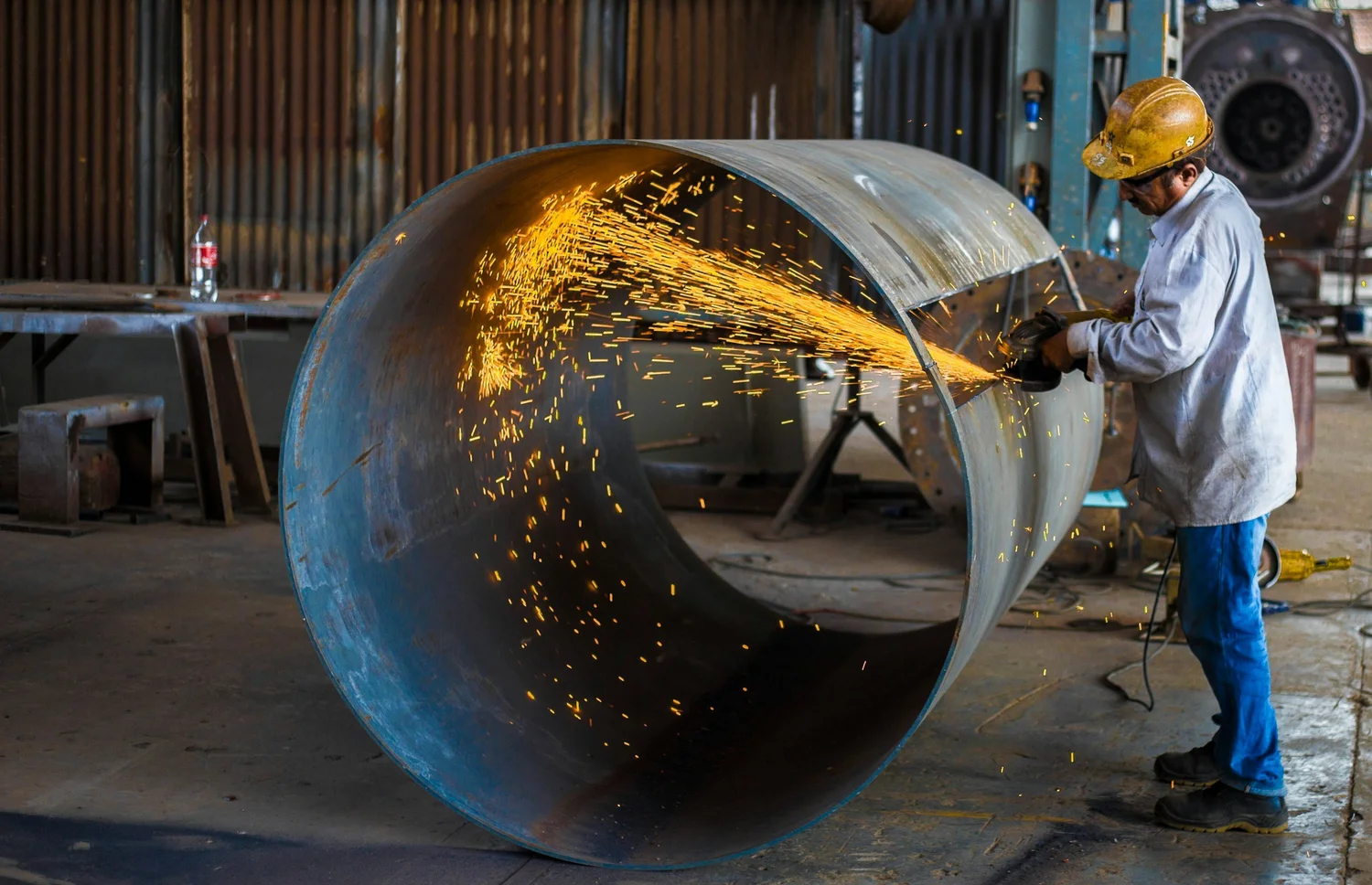
Welding is one of the most in-demand skills at the Halifax Shipyard and across the region's industrial sector. The Irving Shipbuilding Marine Trades Initiative, run in partnership with Nova Scotia Community College, covers all training costs for students entering a two-year welding diploma program specifically to feed the shipyard's workforce needs. That kind of employer-funded pathway is rare and worth paying attention to. Entry-level welders in Halifax earn in the low $20s per hour, while experienced fabricators and those with specialized certifications can push well past $35. Welding skills are also highly portable across industries, from marine to construction to manufacturing.
Heavy Equipment Operator: $22 to $35+ per hour
With construction activity across HRM showing no signs of slowing, heavy equipment operators are in consistent demand. Job Bank Canada puts the range for Nova Scotia at $18 to $35.50 per hour, with experienced operators on active construction projects typically landing in the upper half of that range. The work spans excavators, bulldozers, cranes, and loaders across residential, commercial, and infrastructure projects. Operators who hold multiple equipment endorsements and have clean safety records tend to attract the best assignments and the steadiest work.
Transport Truck Driver (Class 1 / AZ): $22 to $35 per hour
Service Canada's 2025 to 2027 labour market outlook for Nova Scotia flagged transport truck drivers as one of the occupations with the highest number of job openings in the province, driven almost entirely by retirements. The supply of qualified drivers is not keeping pace with demand, and employers are noticing. Drivers with a Class 1 licence and a clean abstract are in a strong negotiating position. Wages typically range from the low $20s for newer drivers to $35 or more for experienced operators in specialized freight or long-haul runs.
Forklift Operator: $17 to $25 per hour
Forklift certification is one of the most accessible tickets in the industrial sector, and the demand for certified operators across Burnside Industrial Park, Dartmouth Crossing, and Halifax's warehousing and distribution facilities is consistent year-round. This is often the first step into industrial work for people without prior trades experience, and it opens the door to steady temp placements that frequently convert to permanent positions. Experienced operators working in specialized environments or on night shifts tend to push above the average range. The certification itself can typically be obtained in a day or two.
General Labourer and Production Worker: $17 to $22 per hour
General labour is the most accessible entry point into Halifax's industrial sector and the role with the highest volume of openings through staffing agencies at any given time. These positions span construction sites, manufacturing facilities, food processing operations, and warehouse environments. The ceiling matters here as much as the floor: reliable general labourers who show up, learn quickly, and take on additional tasks are consistently the first to be offered more responsibility, shift upgrades, and eventually permanent placement. It's not the highest-paying role on this list, but for people who are new to industrial work, it's the fastest path to getting inside.
What Separates the People Getting These Roles From Those Who Aren't
The wages above are real, but they don't go to everyone who applies. In a market where employers have more options than they did two or three years ago, the candidates getting called first share a few things in common.
Certifications matter more than ever. WHMIS, First Aid/CPR, Working at Heights, and forklift certification are table-stakes for many industrial roles. Red Seal or journeyperson certification makes a measurable difference in both the range of employers who will consider you and the rate you can negotiate. If you're missing any of these, closing the gap is often a matter of a few days and a modest investment.
Availability and flexibility are underrated. Employers filling industrial roles often need people quickly and need them to work shifts that aren't always convenient. Candidates who are genuinely available for short notice starts, who can work days, afternoons, or nights, and who don't create scheduling complications are valued disproportionately in this environment.
Reliability is the thing employers say they can't find. It sounds obvious, but showing up consistently, communicating proactively when something comes up, and treating every assignment with the same professionalism regardless of its length is the single most effective thing a worker can do to build a reputation that generates more and better work over time. In a city the size of Halifax, that reputation moves quickly.
How a Staffing Agency Fits Into This
A lot of the best industrial roles in Halifax don't get posted publicly. When a facility in Burnside needs workers by Monday, or when a construction crew needs two labourers to start tomorrow, they call a staffing agency they trust. They don't sort through job board applications.
For job seekers, this means that registering with a staffing agency gives you access to a layer of the market that simply isn't visible otherwise. It also means a faster path to employment than applying cold to postings, because the relationship between the agency and the employer removes a significant amount of friction from the process.
At Integrated Staffing, we work with employers across the HRM and broader Atlantic Canada in manufacturing, warehousing, distribution, construction, and industrial services. We know which companies are actively hiring, what they're paying, and what they're looking for in a candidate. If you're looking to get into one of the roles above, or move up from where you currently are, connecting with our team is a practical first step.

The Window Is Real , and It Won't Stay Open Forever
The trades shortage in Halifax is not a temporary blip. It's a structural gap driven by decades of young people being steered toward university over vocational paths, combined with an aging trades workforce that is retiring faster than it's being replaced. That dynamic creates genuine leverage for anyone with industrial skills or the willingness to develop them.
But the conditions that make this moment particularly good for job seekers, strong local project activity, Irving Shipyard demand, active construction, and a tight Halifax labour market, are not guaranteed to persist indefinitely. Economic conditions shift. Projects eventually complete. The workers who position themselves now, who get their certifications, build their track records, and establish relationships with employers and agencies, will be better insulated when the market eventually tightens further.
If you've been thinking about getting into industrial work, or moving into a higher-paying trade, 2026 in Halifax is a reasonable moment to act on that.
Browse our current job openings to see what's available right now, or reach out to our team to talk through where you're at and what options make sense for you. There's no cost to register and no pressure to take anything that isn't the right fit.