
Hiring through an uncertain economy: how Integrated Staffing keeps the work covered
Canadian employers are heading into the last quarter of 2026 with a trade dispute that has escalated repeatedly since August, inflation stuck at 3% and an interest rate decision due at the end of October. Stretches like this one tend to produce hiring freezes, and Integrated Staffing helps employers keep the work covered until the outlook clears.
Every downturn and every period of uncertainty puts employers in a similar position. Revenue gets harder to forecast, so permanent hiring is usually the first thing to go on hold, while the orders, shifts and deadlines already on the books still need people to handle them. Holding off on new permanent roles is a sensible call when the next six months are hard to read. The work in front of you still has to get done in the meantime.
What’s driving the uncertainty this fall
Trade is the largest source of it. Canada suspended negotiations with the United States in late August, and a U.S. tariff of 50% on $27.6 billion of Canadian goods took effect on August 22. Ottawa answered on September 8 with counter-tariffs of 15%, 25% and 50% on U.S. goods in sectors including steel, dairy, appliances, agricultural equipment, pulp and paper, and electronics. The U.S. widened its tariffs on September 15, and on September 29 it banned imports of several Canadian products outright, among them alcoholic beverages, motorcycles and molasses.
The effects reach well past exporters. Louis-Philippe Gauthier, CFIB’s vice-president for Atlantic Canada, said in August that 40% of exporting businesses in CFIB’s data had products affected by the 50% tariffs. A company that never ships a box across the border can still feel it, because the counter-tariffs raise the price of U.S. steel, equipment and parts it buys, and its own customers may be cutting back.
Tariffs are landing on top of other pressures. Canada’s inflation rate held at 3.0% in August, and in July the Atlantic provinces had the highest rates in the country, with Nova Scotia at 5.0%. Oil and gas prices rose through September. The Bank of Canada held its policy rate at 2.25% on September 2, and markets have been weighing whether it raises rates at its October 28 meeting. When the governor of the Bank of Canada visited Halifax on September 21, he said tariffs are hitting Atlantic Canada less than other regions, but inflation is weighing on it more.
What the numbers say
CFIB’s September Business Barometer recorded the hit to small business plans. Its 12-month confidence index fell almost 10 points to 47.9, and CFIB’s director of economics tied the drop to renewed tariff uncertainty and rising oil and gas prices. On staffing, 16% of small businesses planned to cut full-time staff and 13% planned to hire, the second month in a row with more planned layoffs than hires.
The wider job market is in better shape. Statistics Canada’s Labour Force Survey put national unemployment at 6.4% in August, down from 7.1% in September 2025, with Nova Scotia at 6.1%. Larger employers were also more confident before the August escalation: in a survey of 508 Canadian hiring decision-makers run by Express Employment Professionals and the Harris Poll in late May 2026, 74% said they felt positive about hiring for the rest of the year. From where our recruiters sit, experienced candidates are still getting hired, and an employer who freezes every role until spring should expect to compete for them against companies that kept hiring.
How Integrated Staffing helps
Contract and temporary staffing works through any downturn because it ties labour costs to the work coming in, week by week. Our contract and temporary workers are on our payroll. You pay an hourly rate for the hours worked, and your headcount plan stays where it is.
When the economy can change in a week, a contract placement lets your staffing change on the same schedule.
Where the pressure shows up, by industry
We place workers in four industries, and this fall’s pressures, tariffs first among them, show up differently in each one.
| Industry | Where the pressure shows up | Who we place |
|---|---|---|
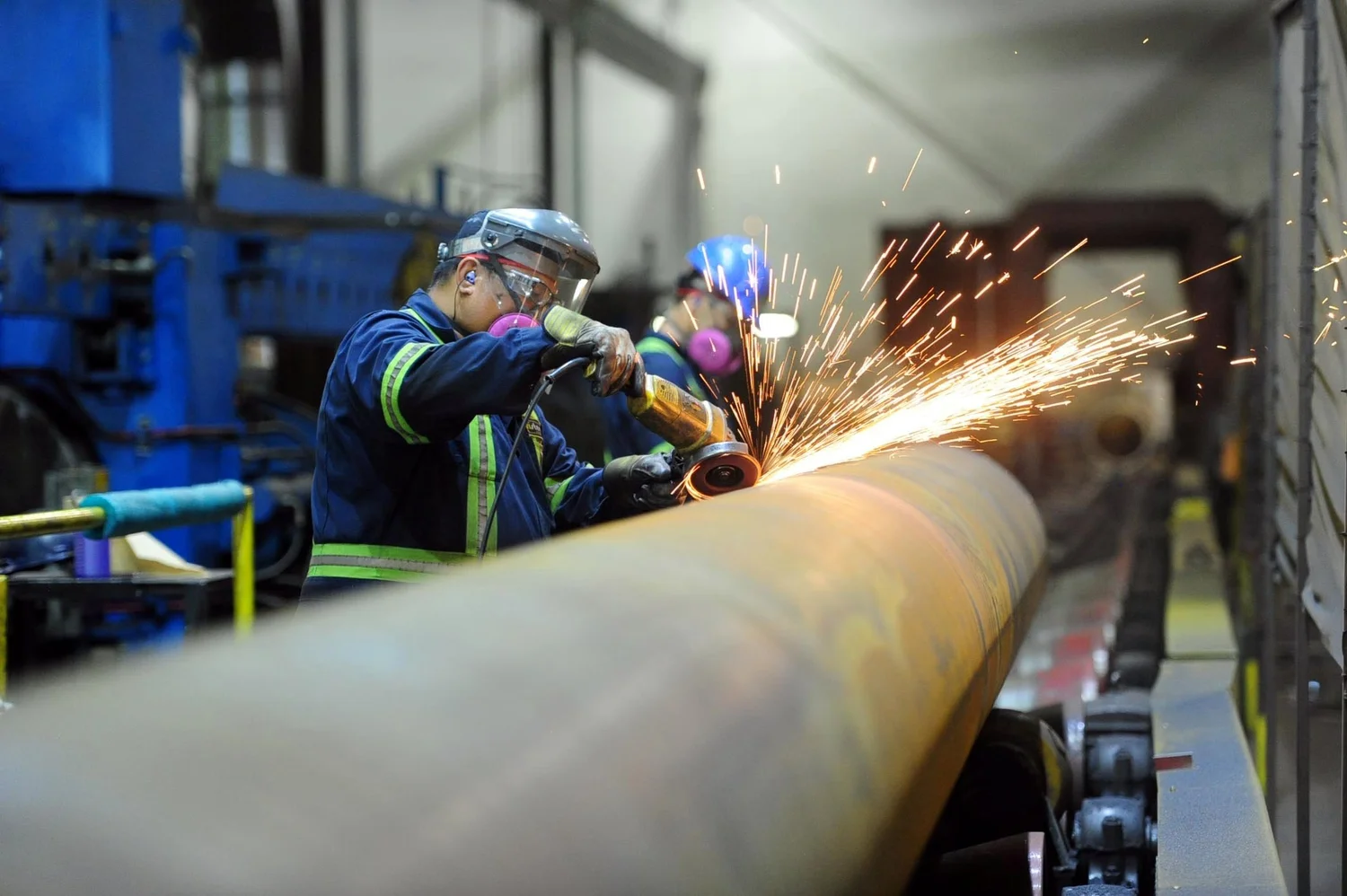
| Manufacturing and light industrial | Higher costs for U.S. steel, aluminum and parts, softer demand, production that speeds up or slows as orders shift | General labourers, production workers, assemblers, machine operators |
| Warehousing | Inventory build-ups ahead of tariff dates, then slower weeks once they pass | Warehouse associates, pickers and packers, forklift operators, shipping and receiving clerks |
| Logistics and transportation | Rerouted shipments, changing cross-border volumes, higher fuel costs | Material handlers, loaders, shipping and receiving clerks |
| Construction | Steel and equipment costs raised by Canada’s counter-tariffs, project schedules that move with them | Construction labourers, site helpers, general labourers |
Roles listed are common examples. Availability varies by location, so contact the office nearest you for current candidates.
Getting started with us
When a role can’t wait
Some positions cost more empty than filled, even during a freeze. An operations manager, a controller or a site supervisor whose absence slows a whole crew usually falls in that group. For those roles, our permanent placement team recruits across Canada and can start a search while the rest of your hiring stays on hold.
Keep the work covered while the outlook is uncertain.
Our recruiters place contract, temporary and temp-to-perm workers across Nova Scotia, New Brunswick, Prince Edward Island, and Newfoundland and Labrador. Tell us what needs covering and for how long, and we’ll tell you who’s available.
Talk to a recruiterSources: Statistics Canada, Consumer Price Index, August 2026 (released September 14, 2026) and July 2026 provincial figures (released August 17, 2026); Bank of Canada, interest rate announcement, September 2, 2026; Department of Finance Canada, announcement of counter-tariffs effective September 8, 2026 (August 2026); Trade Commissioner Service, U.S. tariff modifications of September 15 and import bans of September 29, 2026; Blakes, U.S.–Canada tariffs timeline (September 2026); CTV News Atlantic, “Atlantic Canadian businesses brace for latest wave of tariff impacts” (August 24, 2026), citing CFIB data; BNN Bloomberg, Bank of Canada governor remarks in Halifax (September 21, 2026); Canadian Federation of Independent Business, Monthly Business Barometer, September 2026; Statistics Canada, Labour Force Survey, August 2026 and September 2025; Express Employment Professionals and Harris Poll, survey of 508 Canadian hiring decision-makers, May 15 to June 1, 2026.